
Today’s biotech researchers operate in a high-pressure environment shaped by accelerated timelines, highly specialized suppliers, distributed teams, and growing operational complexity. While scientists can move from experiment design to AI-assisted analysis in minutes, many labs still rely on outdated procurement workflows. The minute a lab has issues sourcing critical supplies, progress lags.
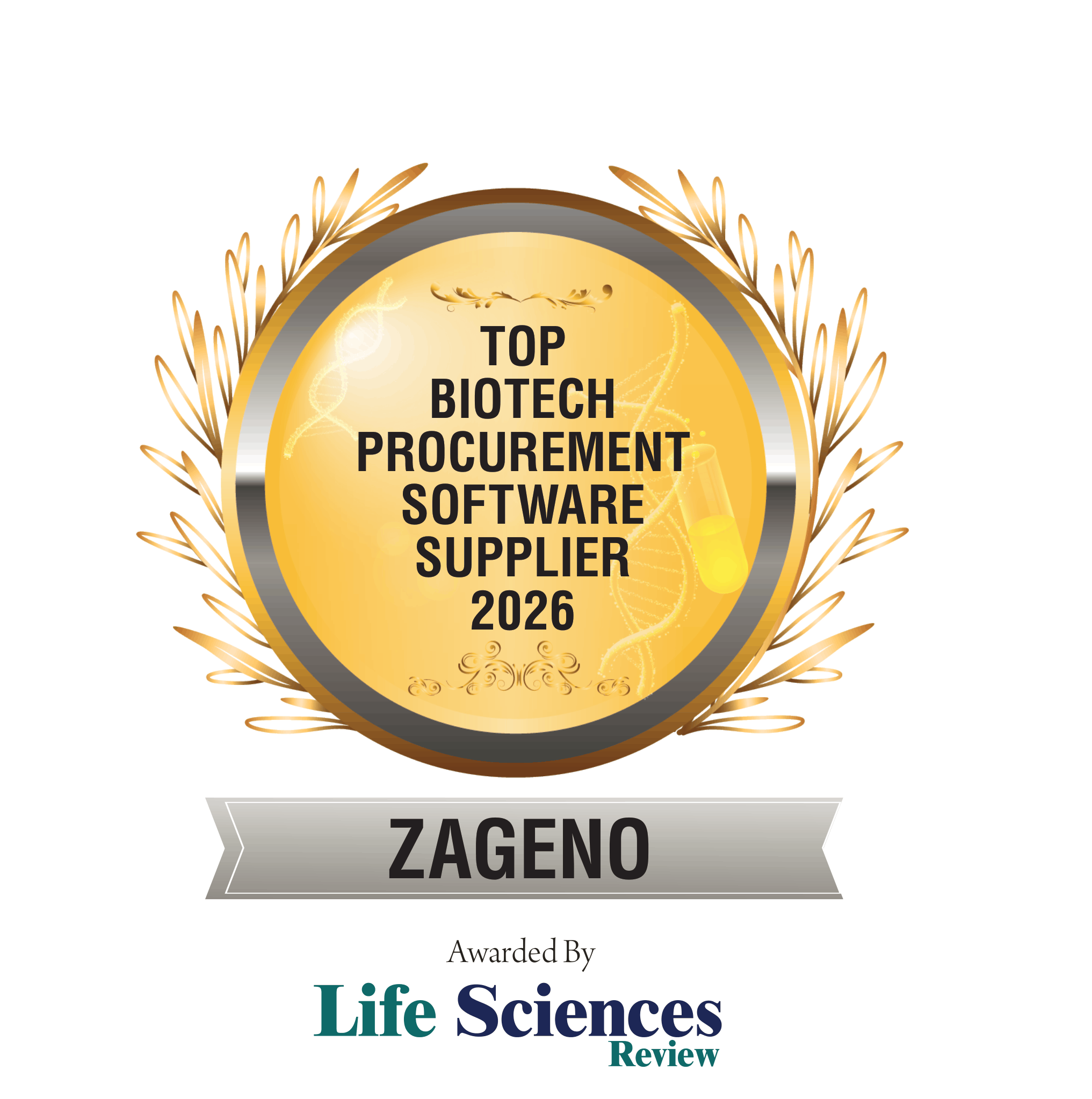
Bridging the gap between protocol to procurement is a primary reason Life Sciences Review recognized ZAGENO as Top Biotech Procurement Software Supplier for 2026.
In the accompanying feature article, Embedding Procurement into the Rhythm of Scientific Work, the publication highlighted a critical industry paradigm shift: procurement can’t function in isolation. To keep pace with R&D in the AI era, purchasing must become an intuitive extension of the scientific workflow itself.
How procurement bottlenecks stifle scientific discovery
For scaling biotechs, purchasing challenges directly impact research velocity. Scientific and lab management teams routinely lose hours navigating fragmented operational tasks, including:
- Disconnected supplier ecosystems: Manually jumping between supplier portals, purchasing systems, and distributor websites.
- Operational drag: Managing manual quote requests, slow approval processes, and inconsistent supplier onboarding.
- Lack of transparency: Operating with limited visibility into real-time pricing, product availability, and order tracking.
When highly trained scientific teams waste valuable time managing supply chain logistics, they lose crucial hours required for benchwork, experiments, and discovery.
As a biotech company scales, these bottlenecks compound. Teams must efficiently coordinate hundreds of vendors across consumables, reagents, specialty materials, and equipment. This creates a constant tug-of-war between corporate financial control and lab flexibility, a challenge that generic enterprise purchasing tools simply aren't built to handle.
Key capabilities required by modern R&D teams
To balance operational control with researcher efficiency, fast-growing life sciences companies require comprehensive orchestration layers that deliver:
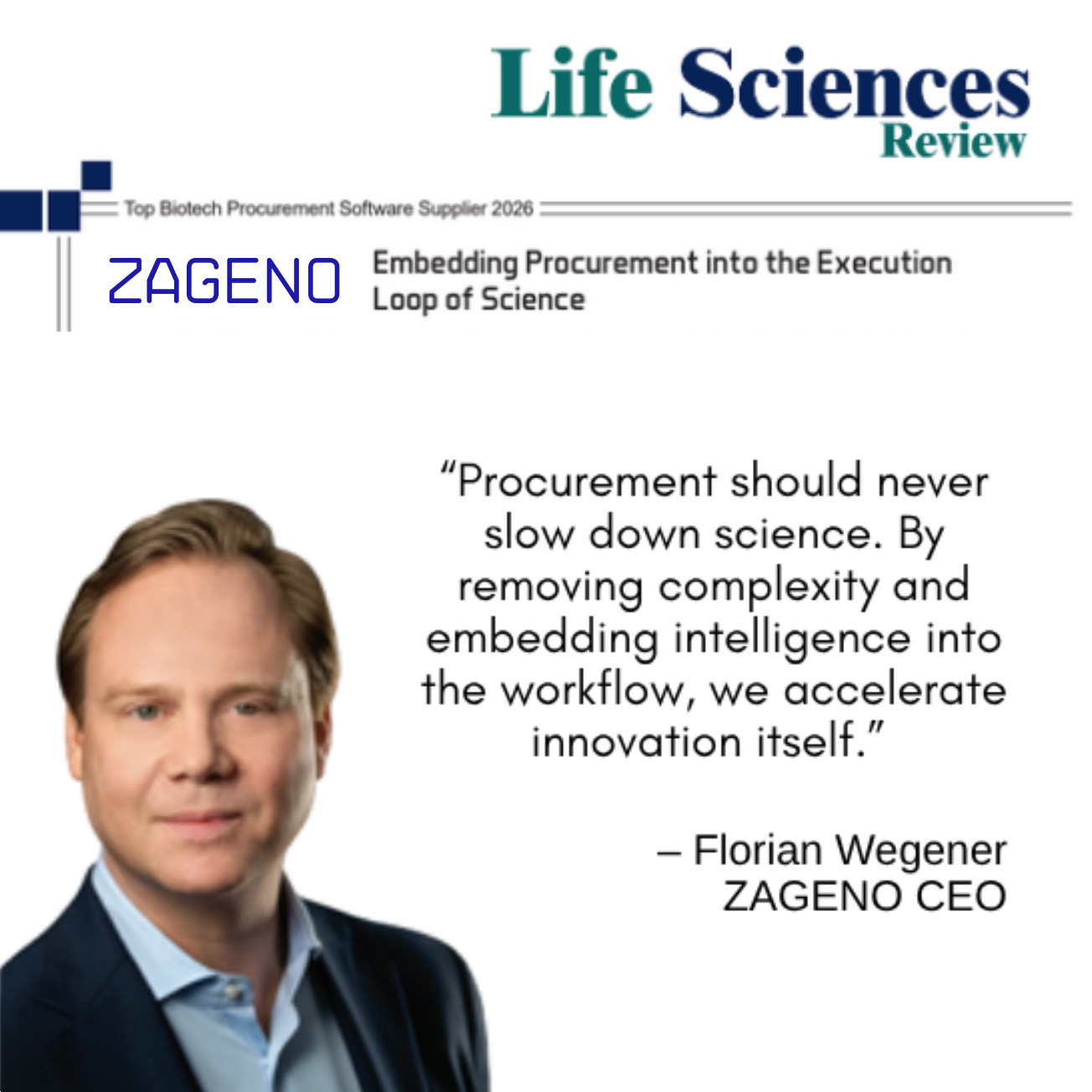
“Procurement should never slow down science. By removing complexity and embedding intelligence into the workflow, we accelerate innovation itself.”
— Florian Wegener, ZAGENO CEO and Co-founder
The value of single-entry point procurement
A major concept highlighted by Life Sciences Review is the industry-wide shift toward single-entry point procurement. Instead of forcing researchers to waste time managing duplicate administrative work, a centralized marketplace model simplifies the entire digital ecosystem into a single home screen.
Key benefits of a centralized marketplace interface:
Rather than forcing labs into rigid purchasing channels that limit scientific freedom, modern solutions must balance corporate oversight with the flexibility researchers require to source exact materials.
Shifting from simple transactions to procurement orchestration
Historically, legacy e-procurement software focused on individual transactions—generating purchase orders, routing basic approvals, and processing invoices. Today’s biotech organizations require far more than a transaction digital ledger. They need a system capable of coordinating suppliers, data, compliance controls, and user experience simultaneously.
This evolution is driving the adoption of procurement orchestration, workflow-connected purchasing, and AI-assisted supply chains.
As noted by Life Sciences Review, modern procurement systems must adapt to the inherent variability and rapid pace of modern scientific discovery. By aligning procurement directly with daily research operations, biotech organizations unlock:
- Smarter, data-driven sourcing and cost forecasting.
- Accelerated supplier onboarding and compliance vetting.
- Enhanced supply chain visibility and risk mitigation.
- Total alignment between corporate finance goals and laboratory timelines.
The future of life sciences procurement
The future of biotechnology development depends on better operational connectivity across research, suppliers, procurement, and finance systems. Procurement teams are under immense pressure to support strict cost control, corporate compliance, and strategic supplier management, all without slowing down scientific progress.
ZAGENO’s recognition by Life Sciences Review reflects this broader market movement toward unified platforms built specifically for the life sciences. As procurement becomes more deeply embedded into daily scientific operations, the organizations that leverage unified orchestration platforms will return valuable time to their scientists, allowing them to operate faster, smarter, and with a distinct competitive advantage.
Next steps for your lab
Read the full feature: View our profile directly on Life Sciences Review.

Optimize your workflow
See how ZAGENO can eliminate operational drag in your lab by scheduling a consultation with our team today.
Related resources