

The Right Way to Connect Your Biotech Procurement Workflow to Your ERP

scientist connecting two systems

Explore how integrated procurement workflows help biotechs connect purchasing with their ERP and work more efficiently.

Biotech purchasing gets complicated much earlier than most teams expect. Small orders multiply, new suppliers are added frequently, and experiments depend on timely access to lab supplies. At the same time, finance teams rely on accurate, structured data to manage budgets and month-end closing. 

The challenge is not just choosing the right procurement tools. It is designing a workflow that connects scientific purchasing to your ERP in a way that works for R&D, procurement, and finance. This guide focuses on the workflow itself. It explains how information should move, what roles should be involved, and how modern biotechs keep the process smooth as they scale.

Learn more about why these workflows matter: ERP procurement issues in biotech

What does a connected biotech procurement workflow aim to achieve?

A connected workflow ensures that:

  • Scientists can request the right items quickly
  • Procurement manages suppliers and routing
  • Approvals follow the right financial controls
  • Purchase activity seamlessly syncs into the ERP 
  • Finance receives clean, accurate data 

This part of the process is less about technology and more about designing the right handoffs between teams. The ideal workflow shortens cycle times, and improves financial accuracy.

What does an ERP-integrated procurement workflow look like in biotech?

A complete procurement workflow in biotech moves through several sequentially connected stages: scientists request lab supplies or equipment, procurement guides or adds suppliers and validates sourcing, approvers verify spending, the ERP generates and tracks purchase orders, and finance manages receipts and reconciliation. When any one of these stages is disconnected, the entire workflow slows down and becomes harder to manage. The sections below outline these stages in order and explain how to design each one so the workflow stays connected from request to reconciliation.

Five key steps in ERP-integrated workflow design

  1. Requisition workflow design for scientific purchasing

    The requisition stage is where most procurement slowdowns begin. The best workflows support scientists without forcing unnecessary steps.

    Effective requisition workflows include:

    • Single entry point to request catalog and non-catalog items
    • Clear guidance on preferred suppliers
    • Built-in project or cost center tagging
    • Easy access to quotes
    • Room for technical or experimental specifications

    This stage should gather all information procurement and finance will need later, so teams are not chasing details downstream. A well-designed requisition workflow gives procurement and finance a stronger foundation for every step that follows.

  2. Supplier access and onboarding

    R&D often needs materials from suppliers not yet in the system. Delays in the onboarding process can create the biggest bottlenecks in scientific purchasing.

    A strong supplier workflow ensures:

    • Procurement controls which suppliers are approved
    • Onboarding is fast enough to keep experiments moving 
    • Supplier data is standardized before entering the ERP
    • Non-catalog or custom items can be requested without workarounds

    This step prevents shadow systems, off-platform purchases, and incomplete supplier data entering financial systems. The goal is not to open the door to every supplier but to avoid blocking research when new materials are required. In this highly regulated industry, the supplier onboarding process is a critical compliance checkpoint that protects against quality failures and regulatory sanctions.

  3. Approvals, purchasing, and ERP connection

    Once a requisition is submitted, it enters a structured approval and purchasing stage. Approvals should follow financial controls while remaining fast for scientists. 

    An effective workflow includes:

    • Automated routing: Requests move to the right manager or budget owner based on clear rules.
    • One consolidated cart: Scientists do not need to build separate orders for each supplier.
    • Automatic coding: GL codes, cost centers, and project identifiers populate consistently.
    • PO creation into the ERP: Once approved, purchase orders sync directly into the ERP without manual entry.

    Why this workflow step is unique

    Unlike the requisition or onboarding stages, this is the moment where the ERP becomes the system of record. The workflow’s job is to prepare clean, consistent data so financial systems remain reliable. 

    This alignment is critical, as integrated budgeting and procurement best practices demand active involvement of all key stakeholders from R&D to finance to ensure fiscal responsibility and process efficiency.

    For a deeper look at how this reduces reconciliation work, visit ZAGENO for finance professionals.


  4. Receiving, matching, and reconciliation

    This is where many workflows fail because the connection stops at PO creation. 

    A complete workflow continues through:

    • Receiving: Scientists or lab operations confirm when items arrive.
    • Matching receipts to purchase orders: The system should align received quantities with what was ordered.
    • Invoice capture: Invoices should enter the workflow in a structured format.
    • Automated three-way match: The system checks PO, receipt, and invoice for alignment and flags discrepancies. 

    This step protects finance from manual cleanup and unexpected budget variances.

  5. Real-time order/delivery tracking and visibility

    Visibility is not just a convenience. It is a requirement for predictable research operations.

    A connected workflow gives R&D, procurement, and finance a shared view of:

      • Shipment status
      • Backorders and supplier delays
      • Estimated delivery dates
      • Supplier performance benchmarks
      • Committed versus actual spend

    This visibility prevents confusion and reduces the need for email chains or status spreadsheets across teams. ERPs alone cannot provide this level of operational insight.

What workflow handoffs matter most when connecting procurement to an ERP?

A strong workflow keeps each handoff consistent, predictable, and easy to follow. Here are the critical handoffs that must be designed intentionally:

  • R&D → Procurement. Requests include enough detail for procurement to source items without delay.
  • Procurement → Approvers. Approvals follow clear rules and flow based on dollar thresholds, teams, or cost centers.
  • Final Approval → ERP. Clean, structured data allows for automated PO creation without manual intervention.
  • ERP → Receiving. Teams know what is expected to arrive and can confirm delivery.
  • Receiving → Finance. Receipts support automated matching and faster close.
  • Finance → Reporting. Structured data flows easily into budgets, forecasts, and audit preparation.

ERPs handle financial accuracy. Procurement workflows handle everything else. The integration is the bridge.

How can biotechs keep procurement workflows running smoothly as they scale?

The biotechs with the strongest procurement operations adopt several key practices:

  • Standardize requisition information to save hours of downstream work
  • Guide teams toward preferred suppliers to limit longtail spend
  • Automate approvals where possible to reduce waiting times for scientists
  • Use real-time tracking rather than email updates
  • Clean data before it reaches the ERP to reduce reconciliation workload
  • Build workflows around day-to-day roles, not tools

These habits reduce slowdowns across teams and help research move steadily.

What does a complete ERP-integrated workflow look like in practice?

A well-built workflow allows teams to:

  • Submit requisitions quickly
  • Use guided supplier options
  • Approve requests efficiently
  • Generate clean POs in the ERP
  • Match deliveries and invoices automatically
  • Track spend in real time
  • Close each month with fewer adjustments

This structure reduces operational strain and improves accuracy across procurement and finance.

The ideal integrated procurement workflow

An integrated procurement workflow is not just a set of tools. It is a connected set of handoffs that support R&D, procurement, and finance from the first request to final reconciliation. When biotechs build workflows that sync cleanly with their ERP, research moves faster and financial operations become more reliable.
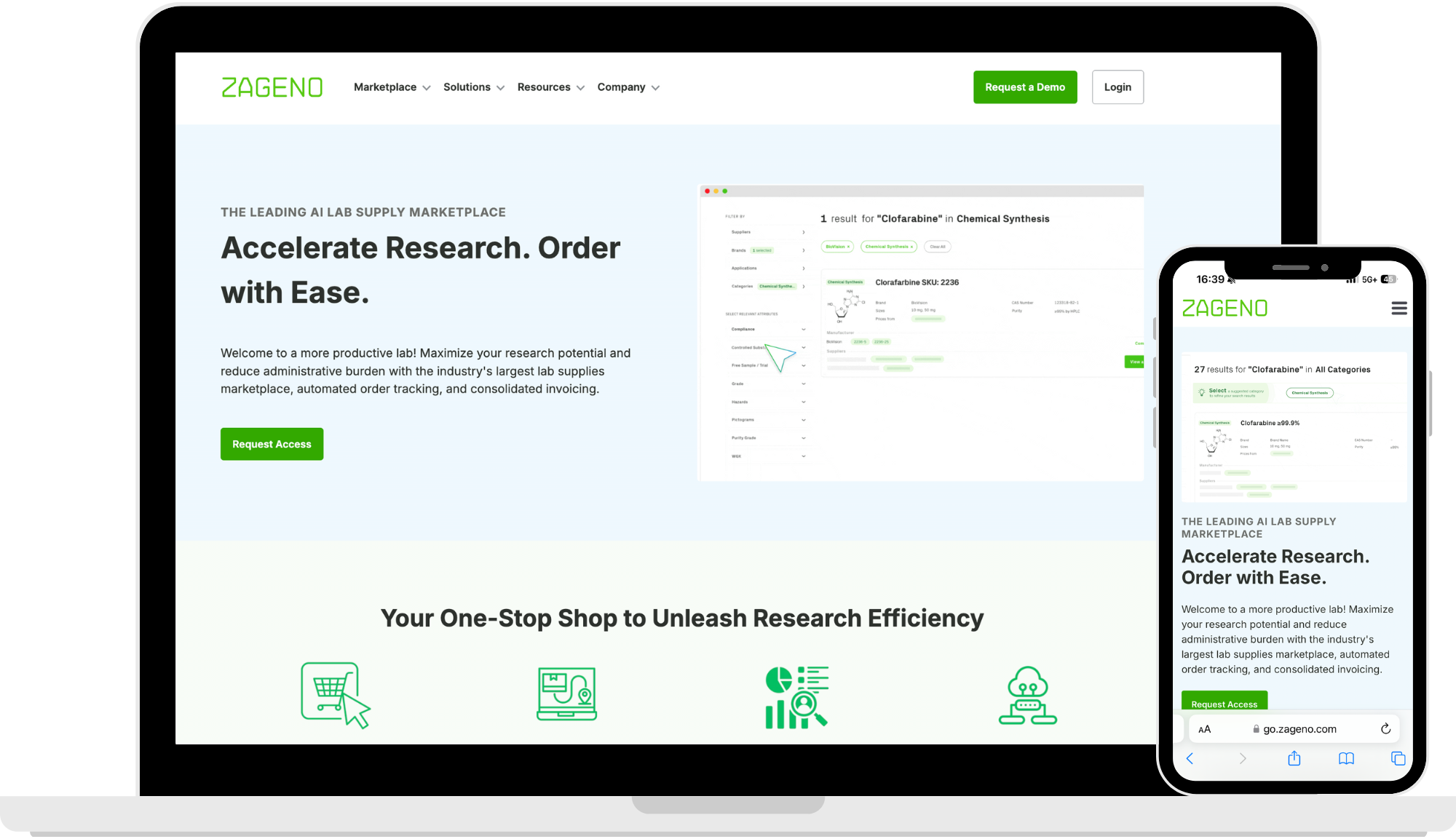
ZAGENO platform shown on desktop and mobile

Talk to our team about creating a procurement workflow that connects smoothly with your ERP and supports scientific purchasing from end to end. 

See how ZAGENO helps teams connect procurement workflows and ERPs in one integrated platform.


All your lab needs in one place

Access 40,000,000 products in one shop!

Trusted by thousands of scientists, lab managers, procurement and finance teams, ZAGENO's marketplace will help you search and order quickly in one go. Reach out for a demo today!