
Imagine a researcher needs supplies for an upcoming experiment. Instead of logging into multiple supplier portals, comparing distributors, checking contracts, and determining which supplier procurement prefers, they simply describe the need in plain language.
Behind the scenes, an AI-enabled procurement platform identifies relevant products, applies the organization’s supplier strategy, and directs the request through the approved purchasing process.
That is guided buying.
For pharmaceutical and biotech R&D organizations, guided buying does more than simplify product searches. It bridges the gap between scientific intent and procurement strategy, supplier data, approval rules, and enterprise systems. Researchers receive relevant purchasing recommendations without becoming procurement policy experts, while procurement gains greater control because strategy is applied when buying decisions are made.
What Is guided buying?
Guided buying is a purchasing process that directs employees toward preferred suppliers, approved products, negotiated pricing, and compliant workflows based on an organization’s procurement policies.
Traditional procurement systems often require employees to find the correct supplier, interpret purchasing rules, and select the appropriate buying channel themselves. Guided buying embeds those decisions directly into the user experience.
An advanced guided buying system can:
- Prioritize preferred suppliers and products.
- Apply negotiated contracts and pricing automatically.
- Recommend approved, high-quality alternatives.
- Route purchases according to specific categories, cost centers, G/L codes, or projects.
- Enforce budget and approval thresholds before the buy happens.
- Direct exceptions through the proper review channels.
- Consolidate spend to help procurement reach rebate commitments.
This guidance can appear through search rankings, product recommendations, supplier routing, approval workflows, or conversational AI. The purpose is not to limit access to scientific supplies. It is to make the best purchasing path the easiest one to follow.
Guided buying is moving upstream
Earlier iterations of guided buying systems typically began when an employee entered a procurement portal and searched for a product. The system then presented preferred catalog items or issued policy warnings.
AI has fundamentally changed where this process begins.
In 2024, Deloitte described a future guided buying model in which employees would explain what they wanted through a chat-based interface. An LLM would identify the appropriate buying channel, provide preferred product and supplier choices, flag policy issues, and submit the completed purchase request.
That future is officially here. Today, a researcher can begin with a scientific objective rather than a SKU or product number. The request might originate in an internal LLM, electronic laboratory notebook (ELN), laboratory information management system (LIMS), or another tool already used to plan and document research.
Guided buying works silently in the background to translate that scientific need into a compliant transaction, moving procurement upstream of the supplier decision.
Step-by-step: How the guided buying process works
An advanced guided buying process connects scientific tools, AI, product data, supplier strategy, and financial systems.
The strategic benefits of guided buying
Guided buying provides a rare win-win: it gives researchers speed while granting procurement and finance total control. Its benefits extend from individual product searches to overall supplier strategy, compliance, and research continuity.
|
Benefit
|
How It Works
|
Strategic Impact
|
|---|---|---|
|
1. Less Time Spent Purchasing |
Eliminates manual multi-catalog searching and contract checking. Researchers describe what they need and receive recommendations that reflect real-time availability. |
Directs time back to science and helps Research Operations teams keep discovery moving by eliminating administrative bottlenecks. |
|
2. Default Policy Compliance |
Embeds preferred suppliers, approved products, and spending limits directly into the search experience. |
Users automatically follow company procurement policies without needing to memorize complex contracts. |
|
3. Reduced Supplier Leakage |
Smart routing automatically directs purchasing demand to contracted vendors before a researcher checks out. |
Maximizes negotiated pricing, consolidates vendor spend, and helps procurement hit volume rebate commitments. |
|
4. Mitigated Maverick Spend |
Makes approved, compliant purchasing paths the fastest and simplest option for the lab. |
Drastically reduces off-contract, unmanaged spending. Exceptions follow a clear review process rather than being flagged post-transaction. |
|
5. Earlier Procurement Influence |
Applies category strategy during the product recommendation stage, before a scientist chooses a supplier. |
Procurement proactively guides purchasing decisions rather than acting as a manual, slow approval bottleneck. |
|
6. Clean, Audit-Ready Data |
Integrates and standardizes cost-center, project, approval, and order data across every transaction. |
Reduces manual accounting entry, streamlines reconciliation, and builds a highly reliable audit trail. |
|
7. Improved Research Continuity |
Instantly surfaces in-stock alternatives and approved substitute suppliers before a stockout delays work. |
Researchers make faster decisions with immediate visibility into pricing, lead times, and available inventory. |
Clearing up the confusion: Key distinctions
Guided buying vs. a marketplace
- A marketplace gives users access to a broad catalog of products from multiple suppliers through a single interface. It creates choice.
- Guided buying determines which of those products and suppliers should be presented based on your organization's logic and agreements. It makes choice manageable.
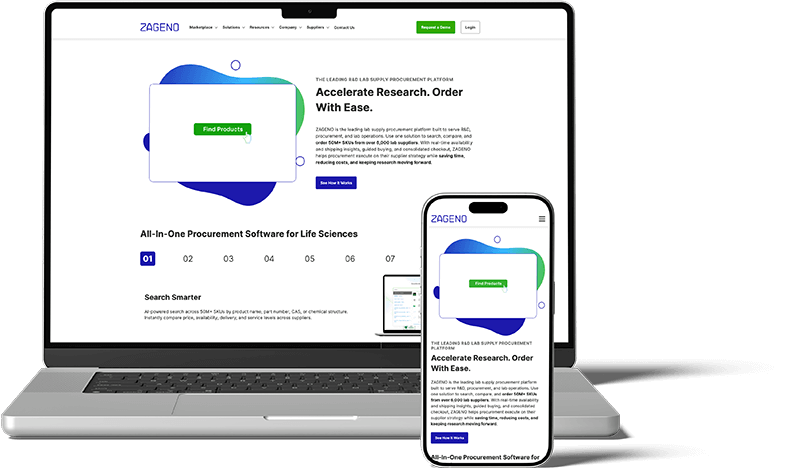
When combined, a broad scientific marketplace like ZAGENO paired with guided buying rules gives researchers variety while keeping procurement in control.
Guided buying vs. a punchout catalog
- A punchout catalog is simply a technical connection method between an e-procurement system and a single external supplier’s site. Researchers must still jump between separate punchouts to compare items.
- Guided buying operates holistically across all suppliers in a single search, applying strategy before the checkout request ever hits your ERP.
Guided buying within scientific procurement orchestration
While guided buying optimizes the point of purchase, Scientific Procurement Orchestration coordinates the entire ecosystem.
Orchestration connects researchers, scientific applications, suppliers, inventory, ERPs, and financial data into one unified operating model. Guided buying is how procurement strategy is executed at the exact moment of need; orchestration is how that request travels from a scientist's mind to lab-bench delivery.
Together, they allow buying to disappear into the science while procurement stays in control.
Explore how this connected model supports modern life sciences procurement.
Turn scientific intent into compliant purchasing
Researchers shouldn't have to double as procurement experts. ZAGENO connects scientific requests with intelligent product discovery, preferred supplier logic, and automated enterprise workflows.
Let your scientists focus on the science, while your procurement strategy runs flawlessly in the background
FAQs about guided buying
- What is guided buying in procurement?
Guided buying is a purchasing process that directs employees toward preferred suppliers, approved products, negotiated pricing, and compliant workflows based on organizational procurement policies. - How does AI improve guided buying?
AI allows researchers to describe what they need in plain language. The AI then interprets the scientific intent, identifies the target products, recommends preferred suppliers, and routes the transaction correctly. - Does guided buying restrict supplier choice?
No. Guided buying prioritizes preferred and compliant options while allowing organizations to define how alternatives and exceptions should be handled. It can preserve access to a broad supplier network while steering appropriate purchases toward strategic partners. - How does guided buying reduce maverick spend?
Guided buying makes approved suppliers, products, and purchasing channels easier to use. It also applies policies and approval rules before a purchase is completed, reducing the likelihood that employees will buy outside established contracts. - Can guided buying integrate with an ERP or P2P system?
Yes. Modern guided buying sits upstream, feeding clean, approved requisitions, POs, and invoices directly into systems like SAP, Oracle, Coupa, or Jaggaer.
Related resources