Originally published in 2025; updated for 2026 to reflect how labs integrate software, systems, tools, and procurement at scale.
Why does the right lab management system and tools matter?
In 2026, choosing the right lab management system and tools is no longer just about organizing experiments: It’s about managing a growing ecosystem of data, inventory, suppliers, and spend as labs scale. As lab operations become more complex, disconnected systems create gaps between research workflows and purchasing processes.
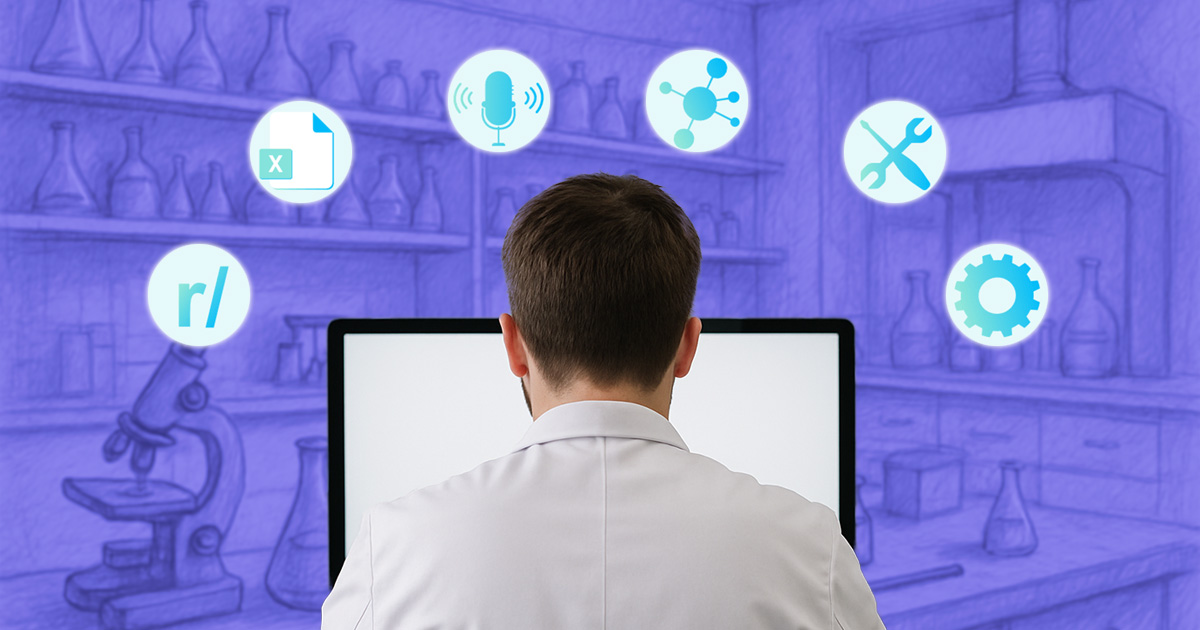
The most effective labs prioritize solutions that bring these elements together, improving visibility, efficiency, and control across both scientific and operational activities. Today’s high-performing labs rely on a dual-stack approach:
- Core scientific software: Systems designed to track workflows, samples, and experimental data.
- Operational and procurement tools: Platforms that facilitate team collaboration, supplier sourcing, and purchasing workflows.
One of the biggest challenges for growing labs is distinguishing between lab workflows and procurement processes. For a deeper breakdown of how these systems compare, see our guide to Lab Procurement Platforms vs. Lab Management Software.
What’s changed since 2025?
Since 2025, the “fragmentation gap” has widened as labs manage more suppliers and higher purchasing volumes. This has increased the need for real-time visibility into spend and supply availability.
In 2026, a lab management tool is no longer just about tracking assets or experiments. It must now integrate with procurement workflows, approvals, and supplier coordination.
This guide highlights the software and systems helping modern labs bridge the gap between the bench and the back office.
What is a lab management system, and how does it fit into modern labs?
A lab management system is the umbrella term for software used to organize laboratory operations, including sample tracking, data management, workflow automation, and compliance. These systems typically include tools such as Laboratory Information Management Systems (LIMS) and Electronic Lab Notebooks (ELNs), each serving a different role in the lab software stack.
In biotech and pharmaceutical environments, these systems help standardize research processes and maintain data integrity. However, most traditional systems are designed to manage internal workflows, not external purchasing. While they may track inventory, they typically do not support supplier comparison or purchasing workflows across multiple vendors, creating operational complexity as labs scale.
Best lab management systems (LIMS) for 2026
A Laboratory Information Management System (LIMS) is a core component of a modern lab management system. It centralizes experiment data, sample tracking, and workflow automation, making it essential for managing scientific operations at scale.
LIMS platforms are widely used across biotech, pharma, and clinical labs to standardize processes, manage samples, and maintain compliance. However, while they are highly effective for managing structured data and operational workflows inside the lab, they are typically complemented by other tools that support experiment documentation and day-to-day scientific work.
Top lab software: 2026 comparison
|
Software
|
Best For
|
Key Features
|
Ideal User
|
|---|---|---|---|
|
Collaboration
|
Sample tracking, ELN, workflow automation, integrations
|
Biotech & pharma R&D
|
|
|
Research labs
|
Inventory, protocol management, data visualization
|
Small to midsize labs
|
|
|
Open-source flexibility
|
Specimen tracking, assay integration, workflow automation
|
Academic & clinical labs
|
|
|
User experience
|
Sample lifecycle management, ELN, reporting
|
Mid-to-large pharma & CROs
|
|
|
Customization
|
Workflow automation, extensive configuration options
|
Enterprise labs
|
|
|
Connected lab management
|
Sample lifecycle tracking, inventory management, workflow automation, audit-ready logs, system integrations
|
Biotech, research, and high-throughput labs
|
|
|
Compliance
|
Regulatory features, mobile access, analytics
|
Clinical & regulated labs
|
Some modern platforms, like SciSure, extend beyond traditional LIMS by combining additional lab and compliance capabilities into a broader scientific management platform, helping connect more aspects of lab operations in one place.
Electronic Lab Notebooks (ELNs)
To support experiment documentation and scientific collaboration, labs rely on Electronic Lab Notebooks (ELNs), which serve a different but complementary role in the lab software stack. Together, LIMS and ELNs form the foundation of most lab management systems.
Leading ELNs in 2026:
- LabArchives. Widely used in academia, government, and industry. Known for collaboration features, searchable experiment records, and institutional compliance.
- Labfolder. Clean interface and strong regulatory support. Favored by labs that need to meet FDA 21 CFR Part 11 and GLP requirements.
- Labstep. Designed for productivity. Connects experiments directly to inventory and integrates with other lab software, making it appealing for startups or growing labs.
- LabWare ELN. Part of the larger LabWare LIMS ecosystem, ideal for enterprise-scale labs needing end-to-end integration.
- RSpace. Flexible and integration-friendly (Dropbox, GitHub, protocols.io). Fits well for multidisciplinary research teams.
- SciNote. Focused on workflow automation and project management, with strong compliance features for reproducibility.
- SciSure. Combines ELN, inventory, and protocol management in one package. Popular in Europe and among biotech startups.
- Signals Notebook. Enterprise-grade, cloud-based ELN. Strong adoption in pharma and biopharma with advanced chemistry/biology modules.
The limitation: While ELNs are excellent for recording what happened during an experiment, they rarely track the cost or source of the materials used. To avoid “data silos,” labs are now linking ELN protocols directly to procurement platforms to ensure every experiment is backed by a transparent supply chain.
Best lab management systems: How to choose
When evaluating a combination of tools for your lab management system, consider these five criteria:
- Workflow Compatibility: Does it match your existing research processes?
- Scalability: Can it grow across teams and locations?
- Integration: Does it connect with ERP and procurement systems?
- Compliance: Does it support necessary documentation and auditability?
- Inventory-to-Purchase: Can it connect inventory usage directly to purchasing?
While many labs focus on scientific functionality first, procurement integration is often overlooked. A system that cannot connect to supplier sourcing and purchasing workflows can create operational gaps as labs scale.
Supporting lab management resources
Open access research platforms
Open access research platforms help scientists discover publications, datasets, and preprints. These tools support research planning and knowledge sharing but do not manage lab operations directly.
|
Platform
|
What It Offers
|
Insider Tip
|
|---|---|---|
|
Extensive biomedical literature and peer-reviewed articles
|
Use the “Similar articles” filter to uncover lesser-known but relevant studies for protocol validation.
|
|
|
Preprints in genomics, bioinformatics, and more
|
Set up subject alerts to get notified as soon as a preprint drops in your field.
|
|
|
Networking, publications, and Q&A with researchers
|
Use the “Request full text” feature to connect directly with authors and spark collaborations.
|
|
|
Broad-scope open-access journal with strong data sharing
|
Check the data availability statements for links to raw datasets useful in benchmarking or AI/ML training.
|
|
|
Rapid publishing with transparent peer review
|
Follow version updates to see how reviewer feedback evolves the research in real time.
|
Educational resources: Podcasts and webinars
In a fast-moving field, staying informed is part of lab management. High-performing lab managers use these resources to stay ahead of compliance changes and new automation technologies.
|
Podcast/Webinar
|
Why It’s Relevant
|
|---|---|
|
Biotech leaders on genomics, automation, and computational biology
|
|
|
Founders and investors discuss challenges in scaling labs
|
|
|
ASCP's podcast for all things laboratory.
|
|
|
Timely scientific discoveries with lab relevance
|
|
|
Broader biotech community, strong R&D insights
|
|
|
Lab supply purchasing advice and strategies for scientists, procurement specialists, finance professionals, and lab operations managers
|
Online lab management communities
Peer support is the "hidden" lab management tool. Joining communities allows managers to troubleshoot common issues—like navigating the differences between lab distributors and suppliers—with people who have already solved them.
Popular Subreddits:
Professional resources development
Continuous learning helps lab managers sharpen leadership and operational skills.
Top 2026 options:
- American Society for Clinical Laboratory Science (ASCLS). Certifications and continuing education
- Association of Laboratory Managers (ALMA). Management workshops and events
- Coursera and edX. Courses in management and leadership
- Lab Innovations. UK-based event showcasing lab tech
- LabOps Unite. Community-driven platform for operational excellence
- Pittcon. Annual conference and expo on lab science with workshops and networking
Where procurement platforms fit alongside lab management?
Lab management systems and tools (LIMs and ELNS) focus on experiments and data inside the lab, while procurement platforms focus on supplier sourcing, ordering, and spend visibility outside the lab.
Lab supply procurement platforms like ZAGENO sit alongside your existing software to reduce administrative overhead as you scale. There is no single tool that manages every aspect; the most effective setup combines LIMS/ELNs for workflows with procurement platforms for supplier management.
For a deeper breakdown of how these systems differ, see our comparison of LIMS vs ELN vs ZAGENO.
Bringing it all together
There is no single tool that manages every aspect of a modern lab.
The most effective lab setups combine:
- Lab management software (LIMS/ELNs) for experiments and workflows
- Supporting tools for research, learning, and collaboration
- Procurement platforms for supplier management, ordering, and spend visibility
Talking with ZAGENO can help labs understand how these systems work together, so teams can scale efficiently while keeping scientists focused on research rather than paperwork.
Frequently asked questions (FAQ)
- What is a lab management system?
A lab management system is software used to organize laboratory workflows, including sample tracking, data management, and compliance processes. Common types include LIMS, ELNs, and inventory systems. While these tools improve internal lab operations, they typically do not manage supplier sourcing or purchasing across multiple vendors. - What is lab management software used for?
Lab management software helps labs organize data, track samples, and manage workflows across experiments and teams. It improves visibility into lab activity and supports compliance, but it typically does not address supplier management or procurement complexity. For that, many labs look to a broader life sciences procurement strategy. - What is the best lab management software for biotech and research labs in 2026?
The best lab management software depends on your lab’s size and requirements. Benchling is widely used in biotech R&D, STARLIMS supports compliance-heavy environments, and Labguru is popular among smaller research teams. - What’s the difference between LIMS and ELN?
A LIMS manages samples, workflows, and compliance processes. An ELN is used to document experiments and protocols. Many labs use both systems together. - Does lab management software handle inventory and purchasing?
Some lab management systems include basic inventory tracking, but they typically do not support supplier comparison or purchasing workflows. Labs often use additional tools to compare lab supplies across suppliers and manage sourcing. - Do labs need both lab management software and procurement software?
Yes. Lab management software focuses on internal workflows, while procurement software manages suppliers, purchasing, approvals, and spend visibility. - Can lab management software replace procurement platforms?
No. These systems serve different purposes. Procurement platforms are designed to streamline sourcing and purchasing across suppliers, while lab management tools focus on experiments and data.