

Biotech procurement scales faster than most operations can keep up with. What begins as a handful of orders from a primary supplier can quickly expand into dozens or even hundreds of vendor relationships. Scientists require speed, Finance demands visibility, and IT must maintain secure, scalable integrations. As organizations grow, the underlying procurement structure becomes just as critical as the tools used to execute it.
This guide breaks down the four primary lab procurement models used in life sciences and explains how to evaluate the best structural fit for your organization’s growth.
If you’re looking for a foundational definition, start with our guide to lab procurement platforms. This article focuses on structural comparison and long-term fit.
The four procurement models biotech teams use
Most life sciences organizations operate within one of four procurement structures:
- Distributor-led purchasing
- ERP-governed procurement
- Inventory-centered lab systems
- Marketplace-style procurement platforms
Many labs evolve through more than one of these models as supplier networks grow.
Distributor-led purchasing
Definition: A procurement model centered on ordering directly from one or a small group of distributors, often through supplier websites or punchout connections.
Works well when:
- Spend is concentrated
- Supplier relationships are stable
- Product needs are predictable
Becomes complex when:
- Vendor count increases
- Scientists must compare items across suppliers
- Invoice volume multiplies
Distributor-led models provide simplicity early on but can introduce fragmentation as research programs diversify.
For a deeper look at how punchout integrations work in research environments, see our guide to punchout catalogs in lab procurement.
ERP-governed procurement
Definition: A model where purchasing is controlled primarily through an ERP or P2P system, with approvals and compliance managed centrally.
Strengths:
- Structured approvals
- Budget enforcement
- Financial audit trails
Limitations:
- Limited native product discovery
- Separate supplier integrations
- IT overhead per vendor
ERP systems are strong at governance. They are not designed to function as multi-supplier comparison tools.
Inventory-centered lab systems
Definition: Procurement workflows built around lab inventory management software.
Strengths:
- Real-time stock visibility
- Reduced stockouts
- Improved internal coordination
Limitations:
- Limited supplier orchestration
- Minimal invoice consolidation
- Often dependent on distributor channels
Inventory systems improve operational awareness inside the lab. They do not centralize procurement strategy across vendors.
Marketplace-style procurement platforms
Definition: A centralized procurement layer connecting researchers, procurement, finance, and multiple suppliers in one workflow.
Strengths:
- Multi-supplier search and comparison
- Consolidated checkout across vendors
- Integration into ERP and P2P systems
- Unified tracking and reconciliation
Trade-offs:
- Requires rollout alignment
- Shifts established ordering patterns
Marketplace-style models are designed for supplier-dense R&D environments where flexibility and consolidation matter.
To see how centralized, multi-supplier procurement works in practice, explore how ZAGENO structures supplier access across vendors.
Where punchout fits
Punchout catalogs are not a procurement model. They are an integration method.
Distributor-led and ERP-governed models typically require separate punchout integrations per supplier. Each connection requires configuration, testing, and maintenance. Most integrations rely on cXML (Commerce eXtensible Markup Language) or similar protocols to transmit cart and order data securely between supplier and ERP systems.
As supplier count grows, integration overhead increases.
Marketplace-style approaches may reduce repetitive integration cycles by consolidating supplier access through a single ERP connection.
Procurement model comparison
|
Strategic Fit
|
Distributor-led
|
ERP-governed
|
Inventory-centered
|
Marketplace-style
|
|---|---|---|---|---|
|
Supplier Coverage |
Limited |
Integration-dependent |
Limited |
Broad |
|
Unified Checkout |
No |
No |
Rare |
Yes |
|
Invoice Consolidation |
No |
Limited |
Limited |
Yes |
|
Integration Burden |
Moderate |
High |
Moderate |
Reduced |
|
Ideal Growth Stage |
Concentrated spend |
Governance-heavy orgs |
Inventory control focus |
Scaling R&D |
Signs your team is evaluating alternatives
Biotech organizations typically reassess their procurement architecture when they hit these specific operational “walls”:
- Growing supplier sprawl that outpaces your internal team's capacity.
- Increasing integration maintenance required for every new vendor punchout.
- Operational delays caused by fragmented ordering across dozens of tabs.
- High invoice volume that overwhelms accounts payable.
- Excessive time spent by PhD-level scientists manually comparing prices.
In highly regulated research environments governed by agencies such as the U.S. Food & Drug Administration (FDA), documentation and compliance requirements can amplify the operational impact of fragmented procurement systems.
These signals usually indicate a structural shift is needed, not simply a feature upgrade.
For additional context on financial oversight in biotech procurement, see our article on technology and R&D spend management.
How to evaluate procurement platform alternatives
Teams researching procurement platform competitors or searching for alternatives are typically trying to answer one core question: Which procurement structure best fits our supplier complexity and growth stage?
When evaluating alternatives, focus on:
- Supplier density and longtail coverage
- Invoice consolidation capabilities
- ERP integration depth
- Punchout dependency
- Scalability across sites and teams
Frequently asked questions about procurement alternatives
What are common alternatives to distributor-led lab purchasing?
Alternatives include ERP-governed procurement systems, inventory-centered lab tools, and marketplace-style procurement platforms that centralize supplier access across vendors.
What should I look for in a procurement platform competitor?
When evaluating procurement platform competitors, assess supplier coverage, integration depth, invoice consolidation, and scalability. Structural fit matters more than feature count.
Is a marketplace procurement platform an alternative to inventory-based lab tools?
Yes. Inventory-based systems focus on internal stock visibility. Marketplace-style procurement platforms focus on coordinating sourcing, approvals, and purchasing across suppliers.
Why do biotech teams search for procurement alternatives?
Organizations typically search for alternatives when supplier sprawl, integration maintenance, or invoice fragmentation begin slowing research operations.
Choosing the right procurement structure
There is no universal solution.
Early-stage biotech may operate effectively with distributor-led purchasing. Enterprise organizations require ERP governance. Inventory systems improve internal visibility. Marketplace-style platforms centralize supplier ecosystems for scaling R&D teams.
The right decision depends on:
- Supplier density
- ERP complexity
- Invoice volume
- Longtail vendor reliance
- Growth trajectory
When evaluating procurement architecture, focus first on structural fit. Features follow structure.
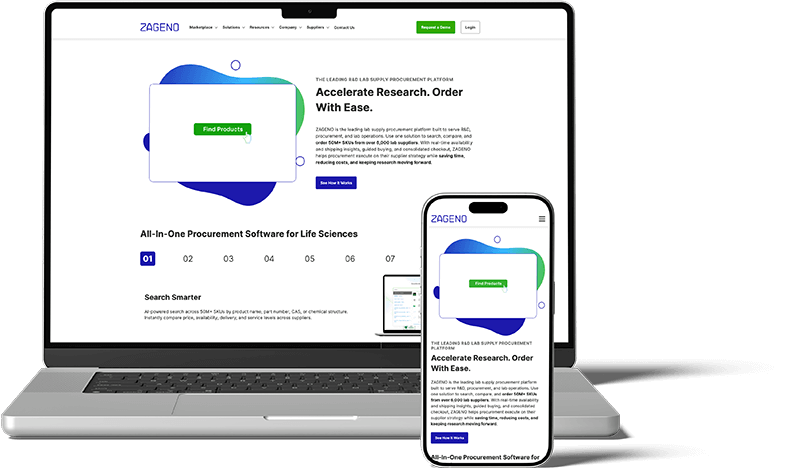
Evaluating procurement platform alternatives for your lab?
When comparing procurement platform competitors, the most important factor is how well a solution manages your specific supplier density and ERP complexity. See how scaling life sciences organizations structure supplier ecosystems using a marketplace-style procurement model.
Related resources