
The strategic shift in pharma procurement
Pharma procurement has expanded beyond transactional purchasing. For pharmaceutical R&D organizations, it now plays a direct role in supply continuity, regulatory compliance, cost control, and the availability of materials researchers need to keep experiments moving.
How pharma procurement works
Effective pharma procurement is a cross-functional discipline involving researchers, lab operations, and finance teams. The lifecycle typically includes:
Understanding the procurement lifecycle is only the first step. Many organizations are now redesigning their purchasing processes to eliminate manual work, reduce delays, and improve researcher productivity. See how leading organizations streamline lab purchasing workflows in pharma. Teams also need a balanced set of procurement KPIs for pharmaceutical R&D to measure researcher time, process speed, supplier adoption, spend control, and order reliability.
Where pharma procurement breaks down
As pharma organizations scale, manual procurement processes often become a bottleneck to innovation. Common challenges include:
The cost of inaction: Inefficient procurement doesn't just waste budget, it creates research debt where scientists spend up to 20% of their time on administrative sourcing rather than discovery. These issues are explored in more detail in our guide to pharma procurement challenges, including supplier fragmentation, disconnected workflows, procurement visibility gaps, and compliance risk across R&D environments.
Organizations looking to improve audit readiness and procurement traceability should also review our guide to pharma procurement compliance and connected procurement workflows for regulated R&D operations.
What pharma procurement transformation actually looks like
Pharma procurement transformation goes beyond digitizing individual purchasing tasks. It connects strategic sourcing, researchers, suppliers, approvals, procurement data, and enterprise systems through a coordinated operating model. Scientific procurement orchestration provides the workflow layer that makes those connections work in practice
Leading teams are transitioning from tactical buying to an integrated ecosystem:
| Feature | Legacy Pharma Procurement | Transformed Procurement |
|---|---|---|
| Sourcing | Fragmented / supplier-specific | Single entry point via a centralized digital marketplace |
| Visibility | Siloed in ERPs / spreadsheets | Real-time / Integrated analytics |
| Compliance | Manual audit trails | Automated GxP documentation |
| Scientist Experience | Heavy administrative burden | Seamless, self-service ordering |
Many of these issues can be addressed through structured workflows that improve visibility, supplier coordination, and purchasing consistency. Explore these pharma procurement best practices to see how leading teams are modernizing procurement operations.
Moving toward centralization
By creating a single entry point for all supplier interactions, organizations can reduce supplier sprawl without limiting access to the specialized materials scientists need. Organizations that centralize procurement are already seeing measurable results. In one case, a biotech company reduced purchase orders by 40% and improved purchasing efficiency by consolidating procurement workflows into a single platform. This shift aligns with procurement transformation frameworks outlined by McKinsey & Company, which emphasize supplier consolidation and centralized sourcing models.
Procurement’s role in supply chain resilience
Procurement is the first line of defense for the pharma supply chain. The urgency for transformation is clear: A U.S. Senate report found that hundreds of generic drugs rely on a single API manufacturing country, highlighting significant concentration risk across the pharmaceutical supply chain. Optimized procurement allows organizations to:
- Mitigate disruptions. Quickly pivot to pre-qualified alternative suppliers when primary sources fail.
- Control indirect spend. Consolidate the purchase of lab supplies and reagents to leverage enterprise-level discounts.
- Enhance sustainability. Track the environmental impact of the supplier base as part of broader ESG goals.
A new framework for modern pharma teams
Modern pharmaceutical organizations are bringing procurement closer to the research workflow. Instead of acting primarily as a gatekeeper, procurement gives researchers easier access to approved products and suppliers while maintaining the controls the organization requires, by:
- Standardizing how suppliers are accessed.
- Providing scientists with upfront visibility into lead times and GxP status.
- Integrating spend management directly into R&D project tracking.
Technology supports this operating model by connecting scientific workflows with supplier access, guided buying, spend controls, and enterprise systems. Explore our guides to pharmaceutical procurement software, R&D procurement spend management, and supplier consolidation strategies.
Turn pharma procurement strategy into action
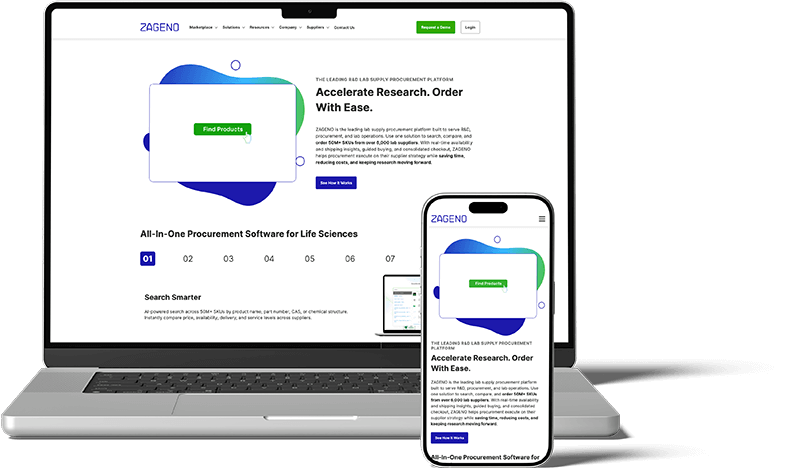
ZAGENO uses agentic AI to help researchers find, compare, and purchase scientific supplies within the workflows they already use. Procurement and finance teams gain greater control over suppliers, spend, approvals, and purchasing rules through one connected platform.
Frequently asked questions about pharma procurement
- What is pharma procurement?
Pharma procurement is the strategic sourcing, purchasing, and lifecycle management of the specialized materials and suppliers required for pharmaceutical R&D and manufacturing. - How is pharma procurement different from general procurement?
Pharma procurement involves stricter regulatory requirements, more complex supplier networks, and closer alignment with scientific workflows and timelines. - What is a pharma procurement strategy?
A pharma procurement strategy is a framework used by life science companies to optimize supplier relationships, ensure regulatory compliance, control R&D costs, and secure the supply chain for critical research materials. - What is pharma procurement transformation?
Pharma procurement transformation refers to modernizing procurement processes through centralization, automation, and improved visibility into supplier and spend data to support faster and more compliant operations.
Related resources