

Improving pharma procurement requires more than controlling costs. It requires better visibility into spend, stronger coordination across suppliers, and systems that support both research workflows and compliance requirements.
As organizations scale, procurement often becomes fragmented across disconnected teams, suppliers, and legacy tools, leading to reduced visibility, inconsistent purchasing decisions, and growing operational complexity. Many organizations are now reassessing how fragmented supplier ecosystems impact pharma procurement efficiency and coordination across research operations. . If you want a deeper breakdown of these challenges, see pharma procurement challenges impacting R&D.
Leading pharma teams are addressing this by adopting procurement best practices that improve efficiency while supporting the pace and precision of R&D.
What effective pharma procurement should enable
Before focusing on tactics, it is important to define what "good" looks like in a modern R&D environment. A mature procurement function should move beyond simple transactions to become a strategic enabler of research.
Effective pharma procurement should enable:
For a broader look at how these goals fit into a larger operational framework, see our guide on pharma procurement strategy.
6 strategies to improve pharma procurement performance
To transition from a disconnected approach to a centralized operating model, organizations should focus on these six areas:
Measure what matters
Improving procurement performance requires clear measures. This pharmaceutical R&D procurement KPI framework shows how to track scientist time, process speed, supplier adoption, off-platform spend, exceptions, transaction effort, and order reliability.
Leading pharma organizations prioritize tracking:
- Supplier usage and consolidation: Monitoring the percentage of spend going to preferred vendors.
- Procurement cycle times: Measuring the speed from initial request to delivery.
- Spend visibility: Quantifying the amount of spend that is fully tracked and categorized.
- Compliance performance: Identifying rates of maverick spend and adherence to workflows.
Many of these best practices become even more important in regulated environments where procurement traceability, supplier governance, and audit readiness are critical. For a deeper look at connected procurement workflows and compliance strategy, explore our guide to pharma procurement compliance.
Bringing it all together
These best practices reflect a broader evolution toward centralized, data-driven procurement. By optimizing workflows and reducing complexity, pharma organizations can accelerate research timelines and improve compliance outcomes. This approach ensures procurement becomes a coordinated, scalable function across the organization.
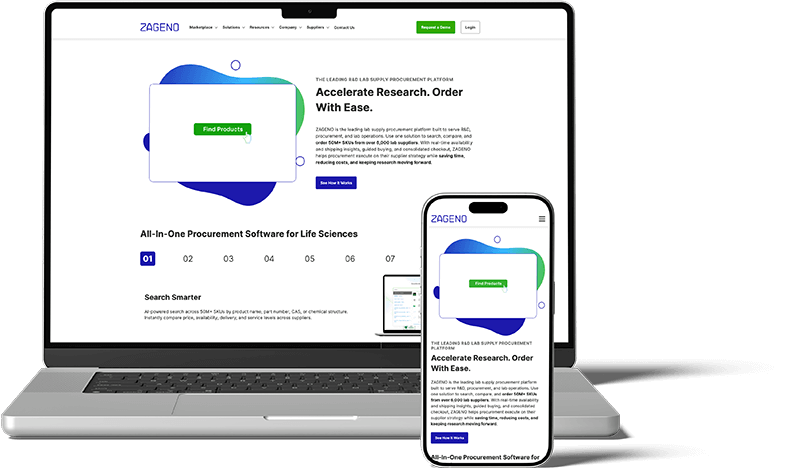
Take the next step
Improving pharma procurement requires a structured approach that connects your suppliers, workflows, and data. ZAGENO helps pharmaceutical teams centralize procurement, improve visibility, and manage purchasing at scale.
FAQ about pharma procurement best practices
- What are pharma procurement best practices?
Pharma procurement best practices include centralizing sourcing, improving visibility, reducing supplier complexity, integrating systems, and embedding compliance into workflows. - How can pharma procurement be improved?
Pharma procurement can be improved by standardizing workflows, increasing visibility into spend, using guided buying, and adopting centralized procurement systems. - What is guided buying in procurement?
Guided buying is an approach that directs users toward preferred suppliers and compliant purchasing workflows, helping reduce maverick spend and improve efficiency. - How does AI improve pharma procurement?
AI improves procurement by analyzing purchasing data to identify cost-saving opportunities, recommend suppliers, and support better decision-making. - Why is visibility important in pharma procurement?
Visibility allows organizations to track spending, enforce supplier strategies, and identify inefficiencies, making procurement more strategic and efficient.
Related resources